

How To Lay a New Lawn – Step by Step
How to Lay a New Lawn – Step by Step
A simple guide to choosing, laying, feeding and establishing a healthy new lawn.

A new lawn can completely transform a garden, but the secret to a healthy, even lawn starts long before the first piece of grass is laid. Choosing the right grass, preparing the soil properly and giving the new lawn enough water during its first few weeks will make a big difference to how quickly it establishes.
Choose the right grass for your garden
Before buying lawn, look at how much sunlight the area receives during the day. Grass varieties have different light requirements, and choosing the wrong type can result in thin or bare patches later.
- Kikuyu – a strong, fast-growing lawn that performs best in sunny areas. It handles regular foot traffic well and recovers quickly.
- LM (Berea) – better suited to partial shade or filtered sunlight. It has a softer, broader leaf and is often a better choice underneath trees or around buildings.
- Heavily shaded areas – first consider whether there is enough light for lawn at all. Selective tree trimming can improve sunlight and airflow, while very deep shade may be better suited to shade-loving groundcovers.
Clear the planting area properly
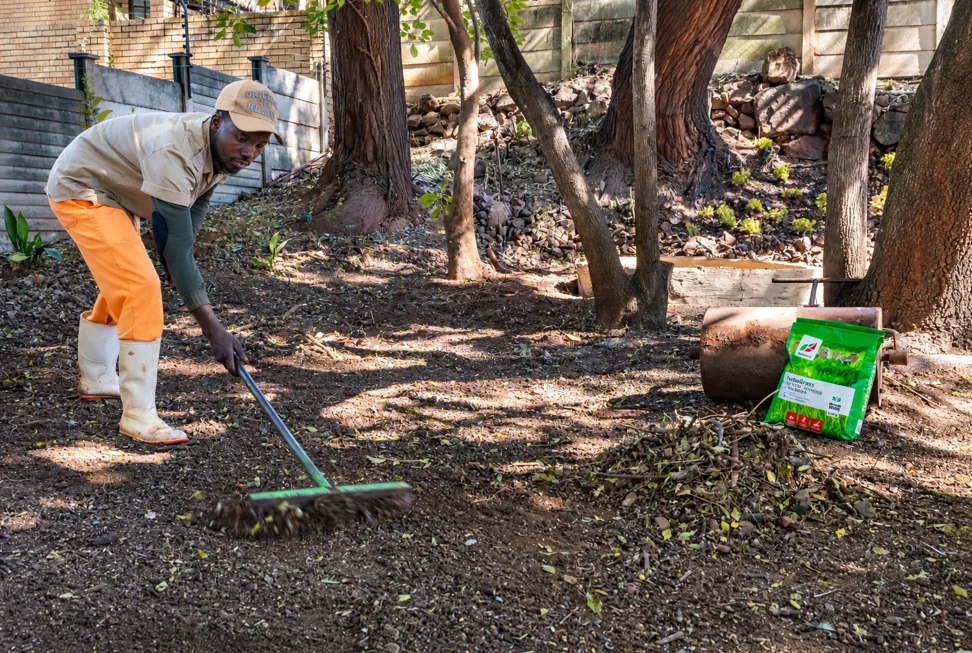
Remove the old lawn, weeds, stones, building rubble and unwanted plant material before laying your new lawn. Pay particular attention to weeds and old plant roots. Simply cutting them off at ground level may not be enough.
Remove as much of the root system as possible, especially from persistent weeds or plants that can regrow through your new lawn. It is much easier to deal with these problems now than after the new lawn has rooted.
Prepare and level the soil
Loosen compacted soil and break up large clumps. Level the area with a rake and remove remaining stones or debris. If the soil is poor, add suitable good-quality topsoil or lawn dressing where required.
The final surface should be reasonably level but not compacted rock-hard. Also check drainage: water should soak into the soil rather than collecting in low spots.
Lay the lawn
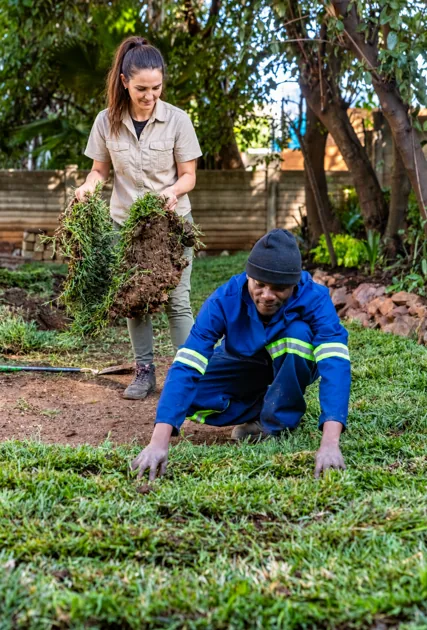

Start along a straight edge and lay the lawn pieces tightly alongside one another. Stagger the joins rather than creating one long continuous line. The aim is good grass-to-soil contact so that new roots can grow down into the prepared ground.
Do:
- Lay each piece directly onto prepared soil.
- Push the edges firmly together.
- Keep the pieces flat and level.
- Fill small gaps rather than leaving exposed soil.
- Lay the lawn as soon as possible after delivery.
Don’t:
- Overlap pieces of lawn.
- Stretch the sod to make it fit.
- Leave large gaps between pieces.
- Leave freshly delivered lawn rolled or stacked in the sun for long periods.
- Lay lawn over weeds, rubble or badly compacted soil.
Firm the lawn into position
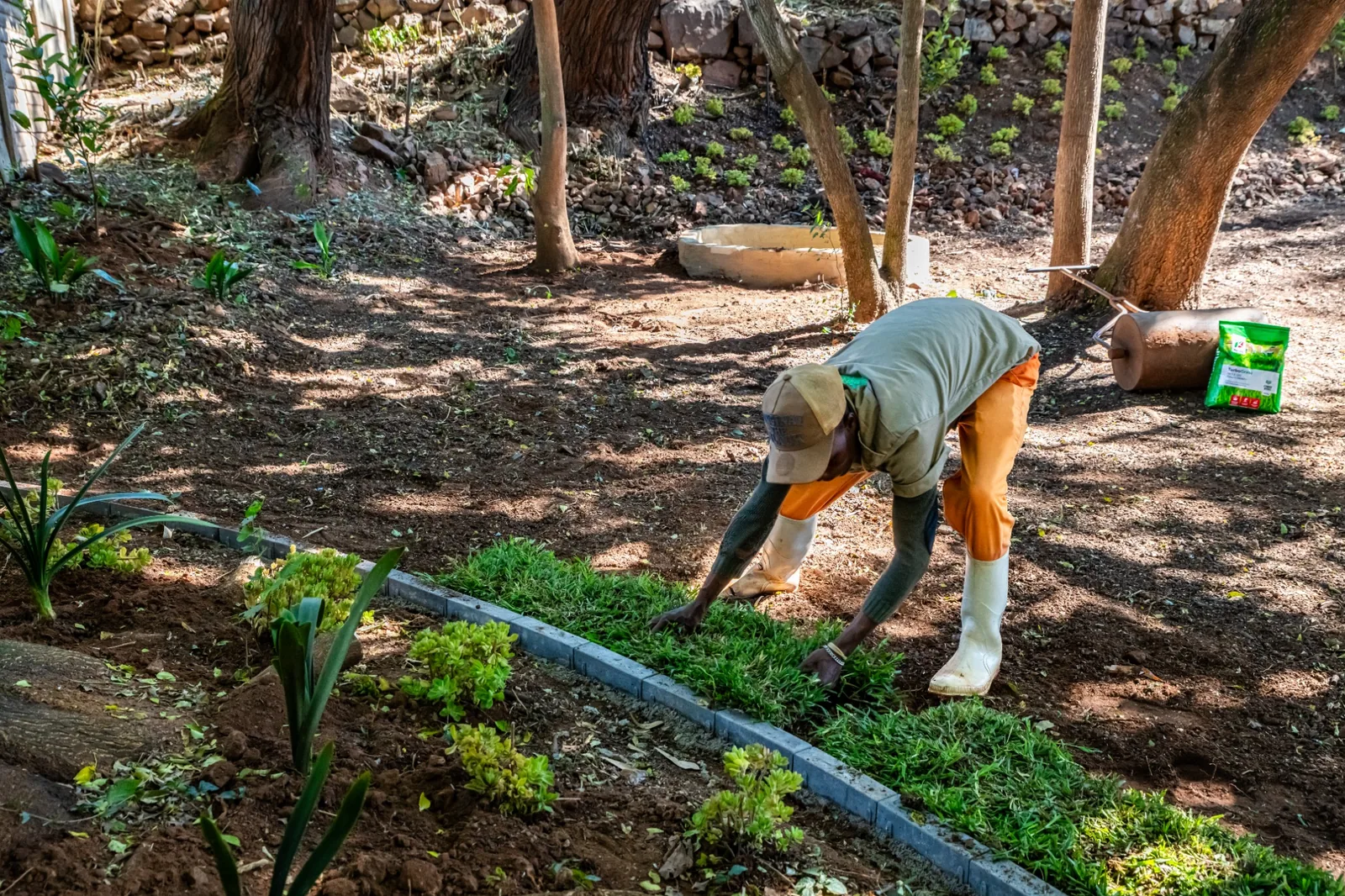
Once the lawn has been laid, gently firm it down. A lawn roller is ideal, but smaller areas can also be carefully pressed into position by hand.
This removes air pockets underneath the sod and improves contact between the existing grass roots and the new soil. Avoid excessively compacting wet soil – you want firm contact, not a hard surface.
Feed your new lawn
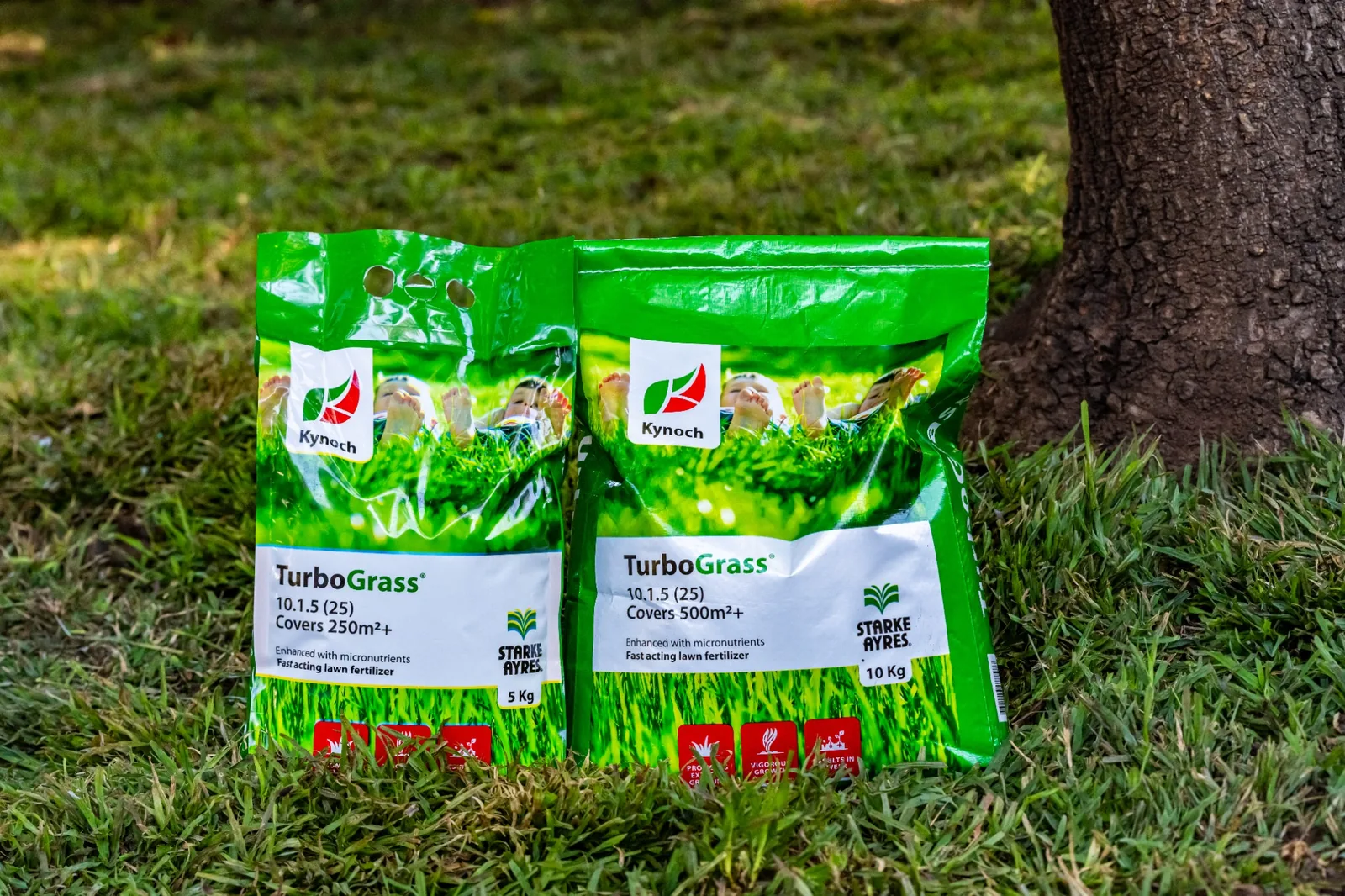
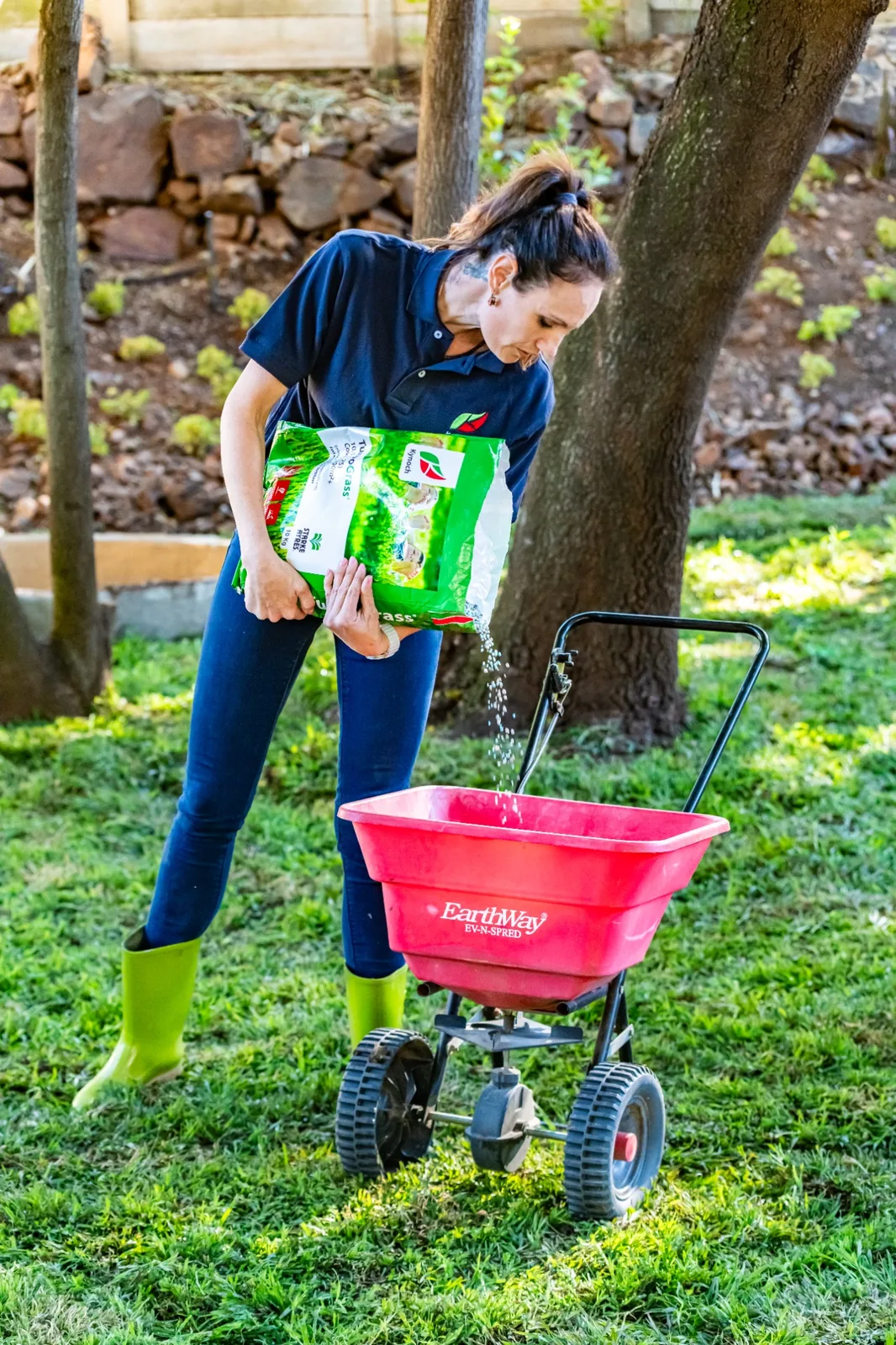
Once the lawn is in place, correct nutrition will help support healthy growth as the lawn establishes. TurboGrass 10:1:5 (25) can be applied evenly using either a fertiliser spreader or by hand according to the application instructions on the pack.
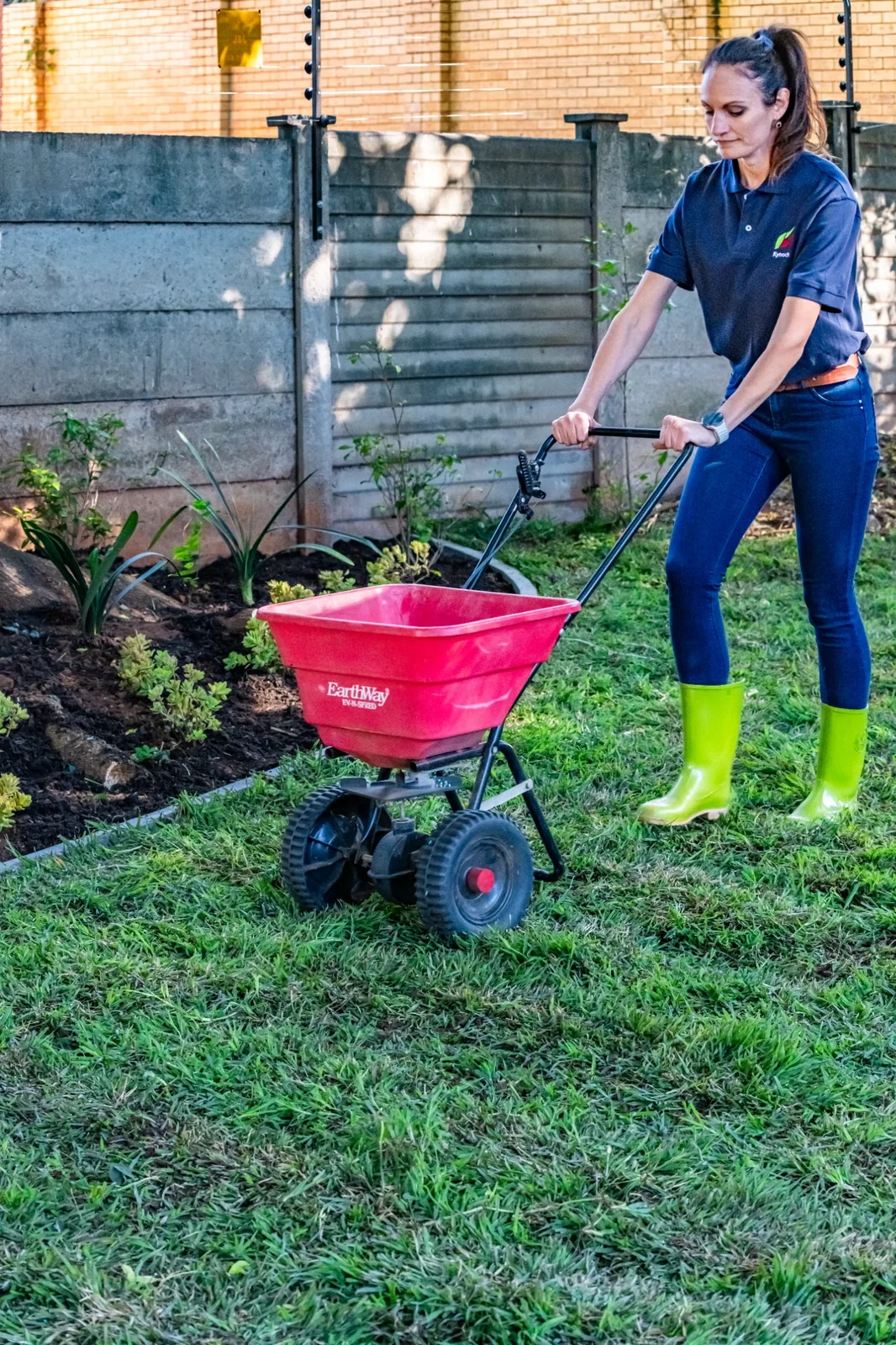
A spreader is particularly useful on larger lawns because it helps distribute fertiliser more evenly. If applying by hand, divide the area into smaller sections so you do not accidentally apply too much fertiliser in one area and too little in another.
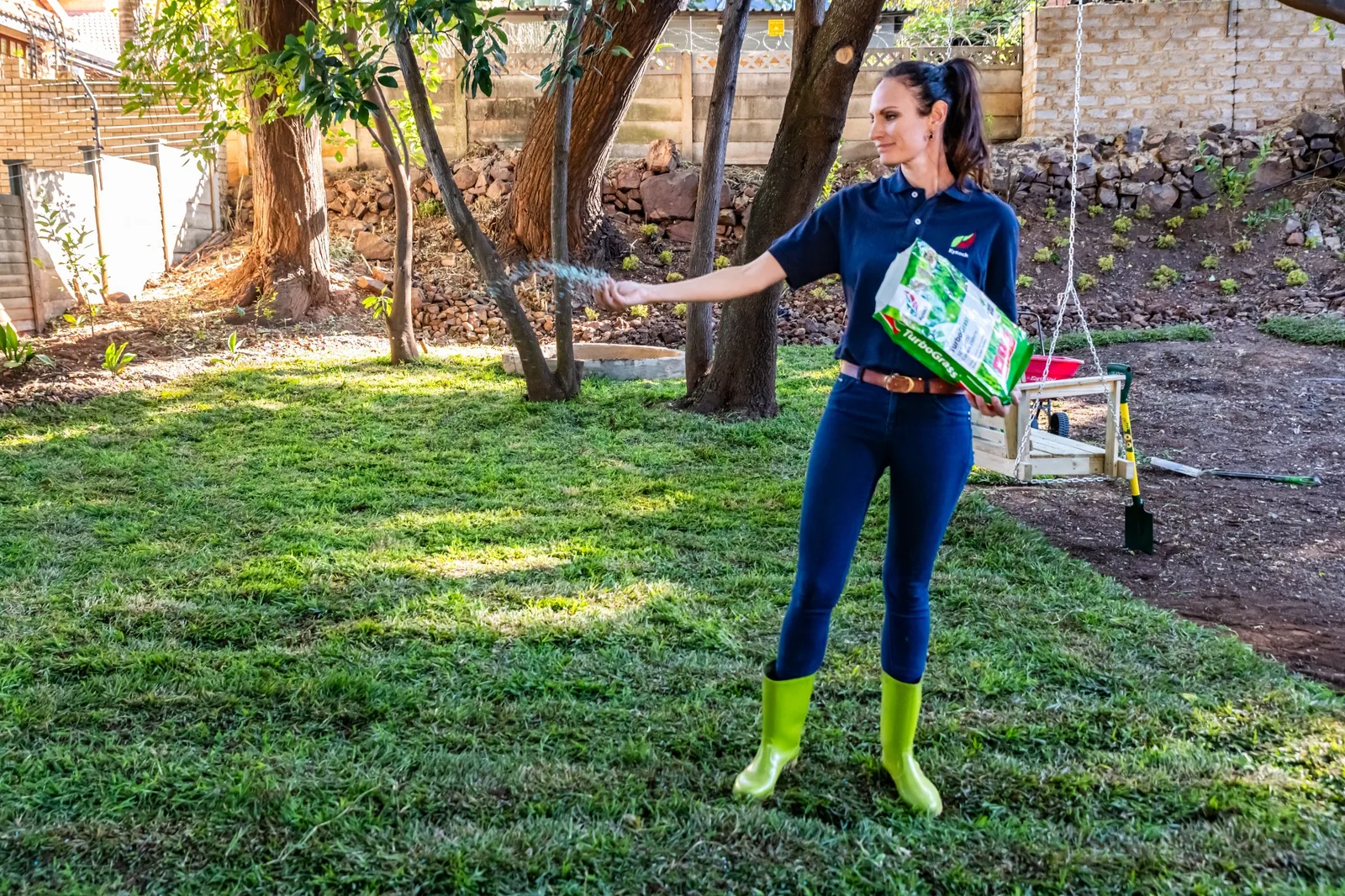
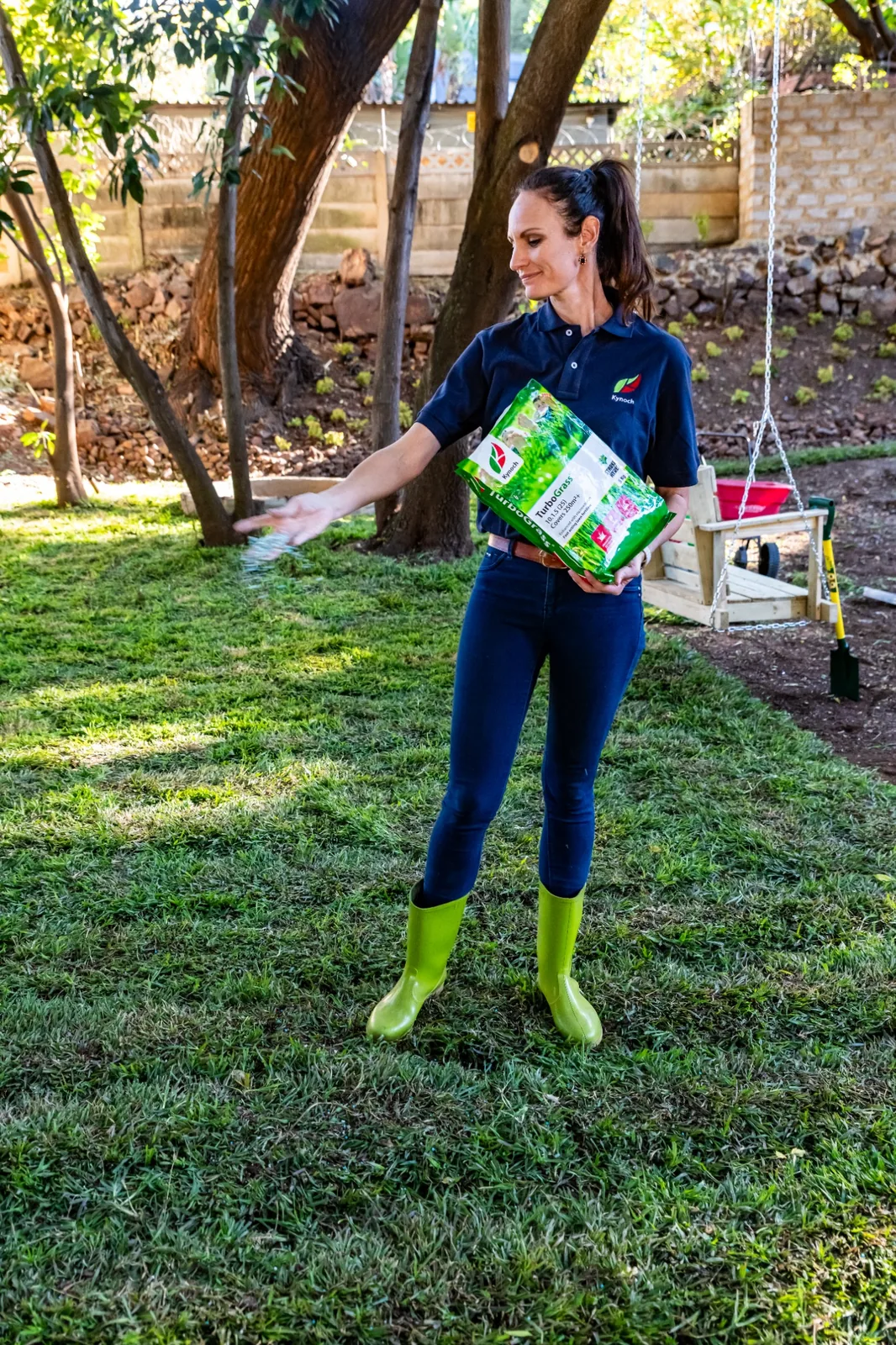
When applying fertiliser
- Follow the application rate on the product packaging.
- Spread the fertiliser as evenly as possible.
- Avoid getting fertiliser in your eyes.
- Gloves are recommended when applying fertiliser by hand.
- Wash your hands thoroughly after handling fertiliser.
- Keep fertiliser away from children and animals during application and storage.
Water immediately
Water the lawn thoroughly immediately after installation. The water needs to penetrate through the sod and wet the soil underneath it.
For approximately the first 10–14 days, keep the root zone consistently moist while the roots begin growing into the soil below. In warm or windy conditions this may mean watering lightly more than once a day. In cooler weather or after rain, less water may be needed.
Rather than following a rigid number of minutes, check the soil. Carefully lift a corner of the lawn and feel underneath it. The soil should be moist, but the lawn should not continuously sit in water.
As the roots establish, gradually reduce the frequency of watering and water more deeply. This encourages roots to grow further down into the soil.
Check whether the lawn has rooted
After approximately 10–21 days, depending on temperature, grass type and growing conditions, start checking the lawn. Gently take hold of a corner of a piece of sod and try to lift it.
- If it lifts easily, the roots still need more time.
- If you feel resistance and the lawn is holding onto the soil underneath, new roots are developing.
- Fresh new growth across the lawn is another good sign that it is establishing.
Once the lawn has rooted, gradually move away from frequent establishment watering towards a normal lawn-watering routine.
The first mow
Do not rush to mow newly laid grass. Wait until the lawn has rooted firmly and has started producing active new growth. Before mowing, test several areas to make sure the sod does not lift.
For the first cut, use sharp mower blades and avoid removing more than roughly one-third of the grass blade at a time. In shaded areas, keeping the grass slightly longer can help it make better use of the available light.
Keep your new lawn growing
Once your lawn has established, regular mowing, correct watering and seasonal feeding will help maintain its colour and density. A healthy, dense lawn also gives weeds less open space in which to establish.
TurboGrass is available in 5 kg, covering approximately 250 m², and 10 kg, covering approximately 500 m².
Quick checklist
Choose the correct grass → Clear weeds and roots → Prepare and level the soil → Lay lawn tightly → Firm it down → Feed correctly → Water thoroughly → Check for rooting → Begin normal lawn care.
Add comment